
I'm a participant in the Amazon Services LLC Associates Program, an affiliate advertising program designed to provide a means for me to earn fees by linking to Amazon.com and affiliated sites.
If you’ve ever cleaned a carpet stain with a portable carpet cleaner and ended up with dark rings, water lines, or uneven patches, you’re not alone. Water marks happen when the carpet surface dries inconsistently or when moisture moves through the fibers unevenly. The good news? They’re 100% preventable once you understand how portable cleaners actually work.
- Shark StainForce is the best cordless option for fast, everyday cleanups.
- Shark StainStriker delivers the deepest cleaning power for tough carpet stains.
- Hoover CleanSlate Pro is the best for large spills and high-traffic homes.
- BISSELL Little Green remains the best all-around value.
- BISSELL Little Green Mini is the best tiny-but-mighty option for small spaces.
Quick Verdict:
To avoid water marks, use less water, extract more than you clean, and dry the cleaned area faster than the surrounding carpet. Most water rings happen because the carpet is wetter than you realize.
Why this matters:
Water marks make your carpet look worse after cleaning than before — which is frustrating when you’re trying to make it look fresh. If you learn the right technique, you get pro-level results every time, even with a simple portable cleaner.
Product | Cleaning Power | Portability | Cordless | Best Use Case | Tank Size | Price | |
|---|---|---|---|---|---|---|---|
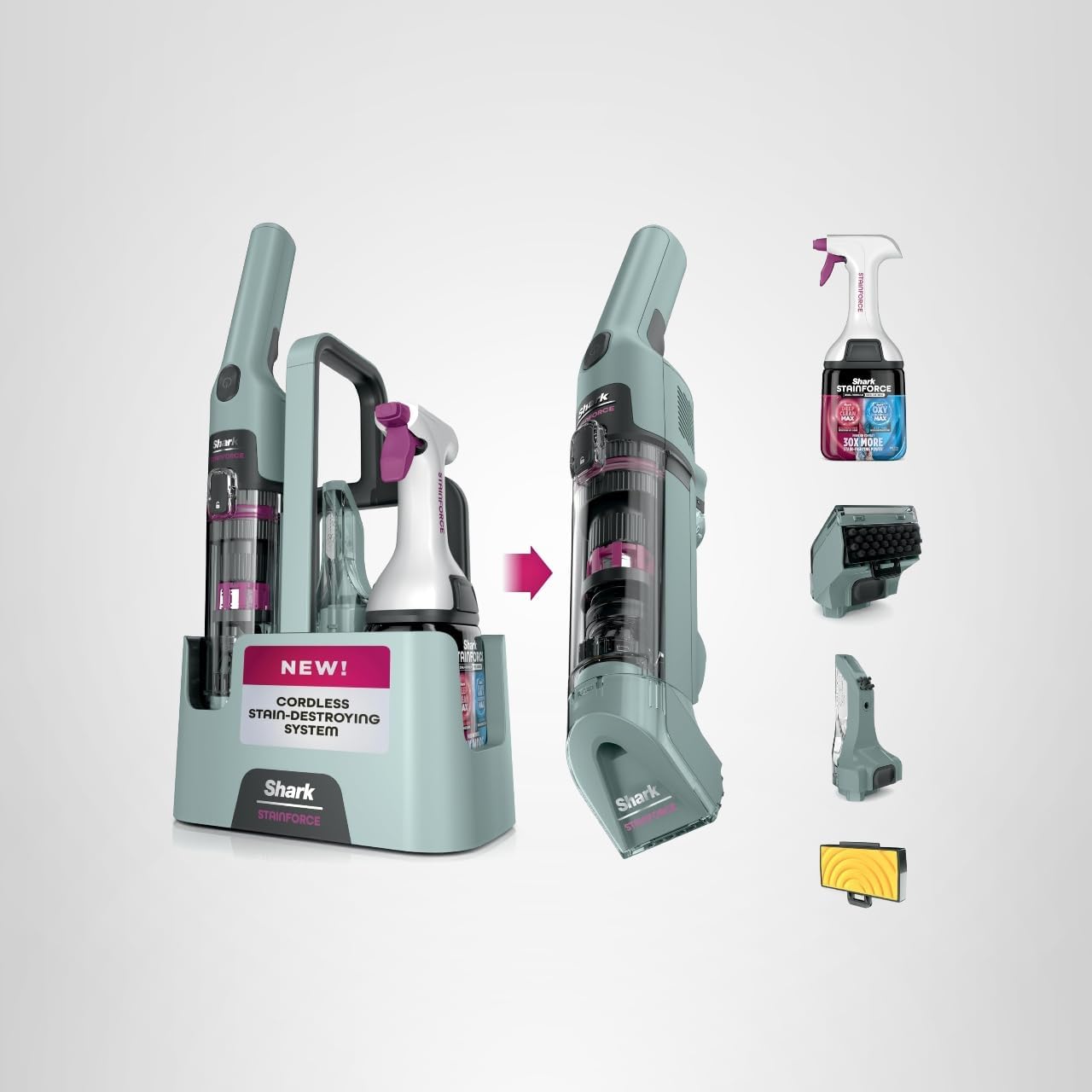 | Good | Excellent | Yes | Quick spills, pets, cars | Small |  | |
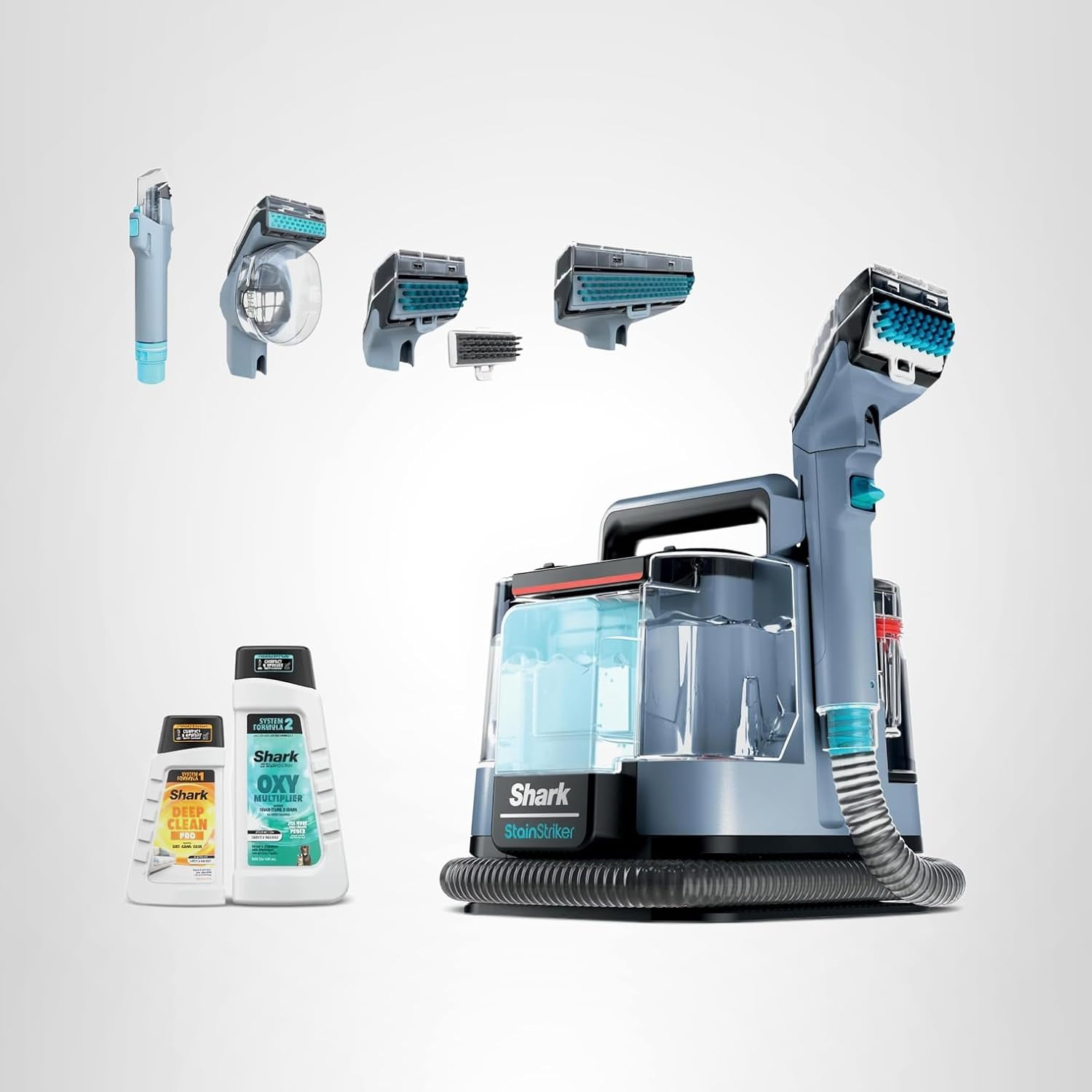 | Excellent | Good | No | Deep stains, carpets | Medium | | |
 | Very Good | Good | No | Everyday stains, upholstery | Medium | | |
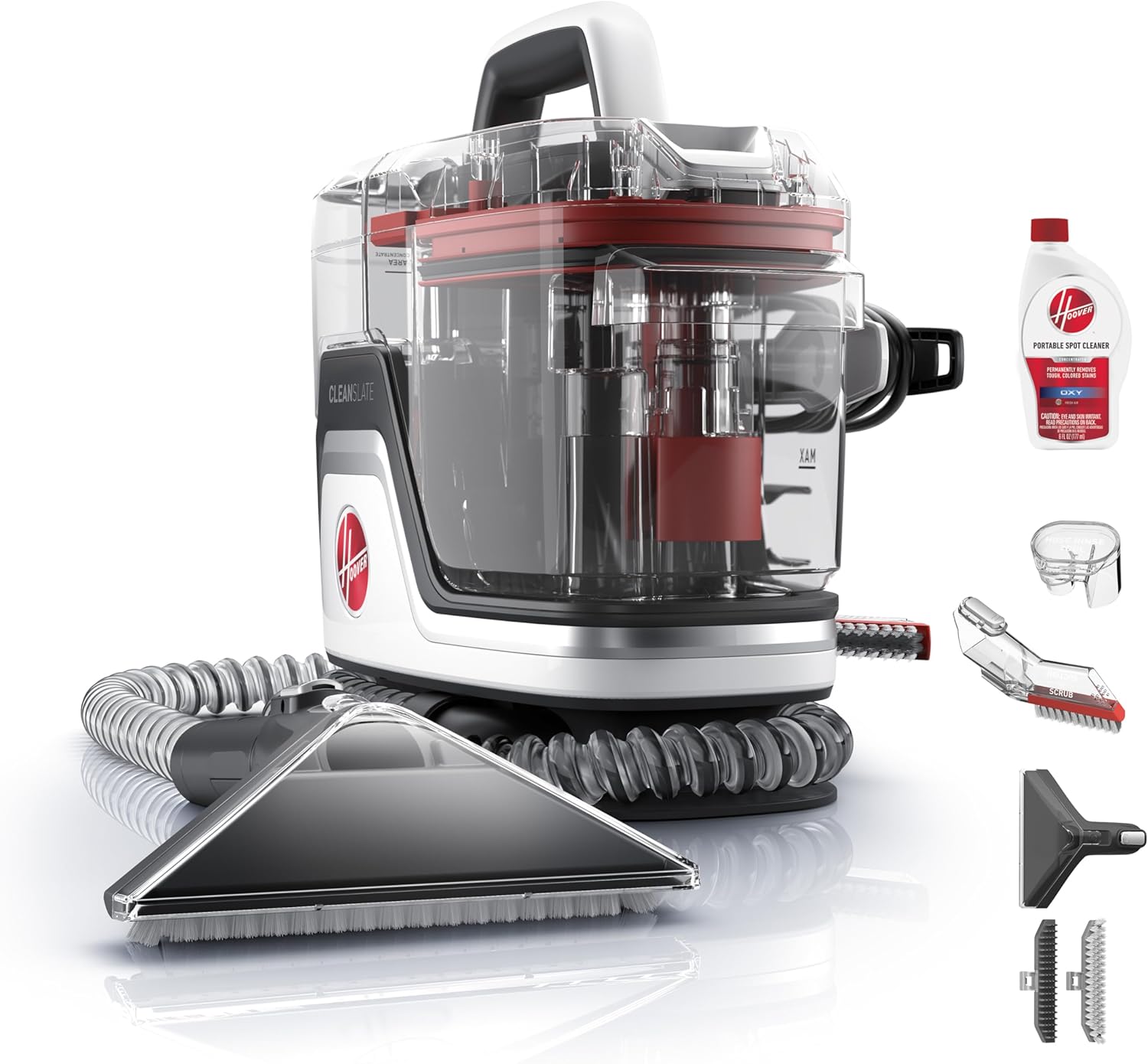 | Excellent | Fair | No | Large stains, carpets | Large | | |
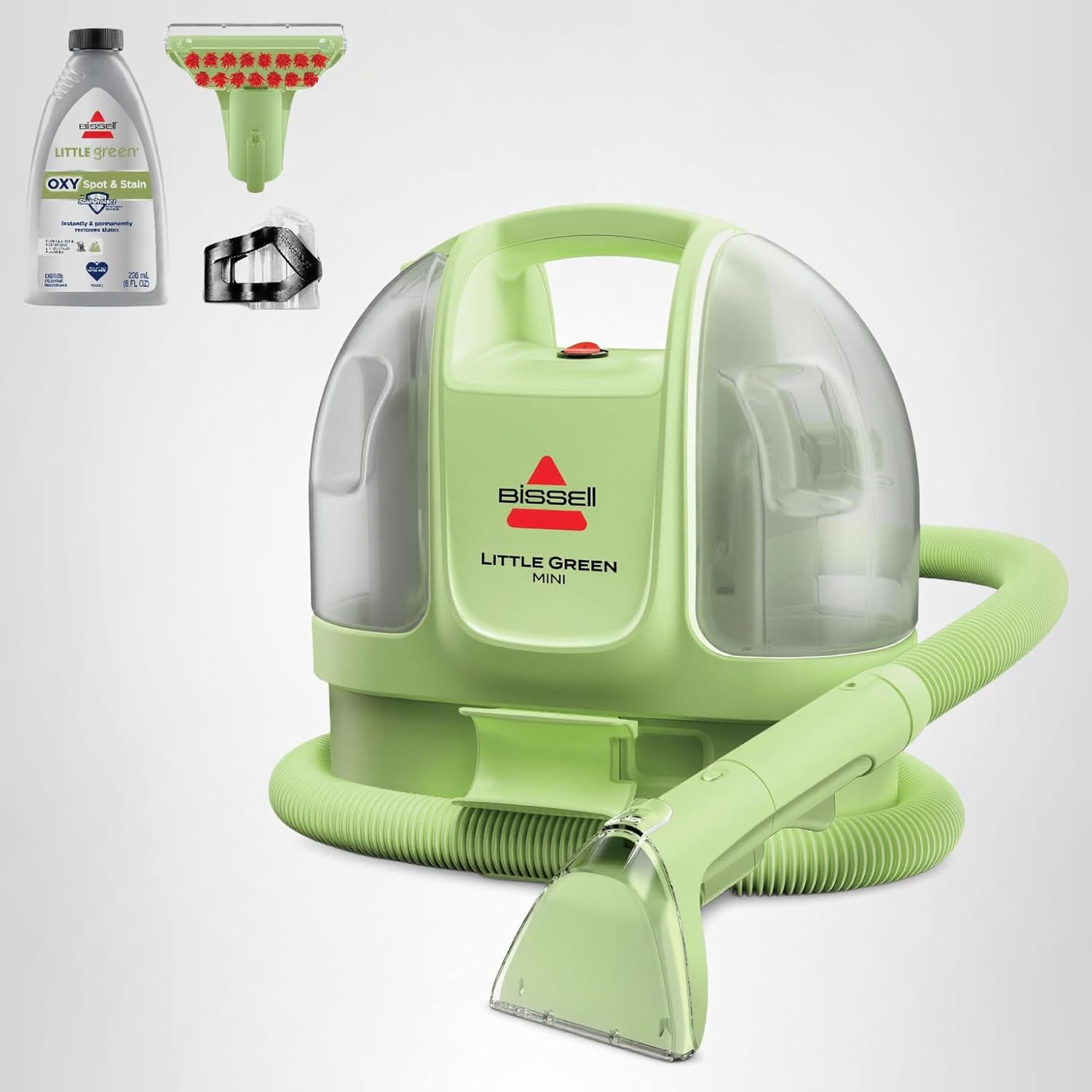 | Good | Excellent | No | Light stains, tiny spaces | Small | |
1. Understand Why Water Marks Happen in the First Place
Water marks show up when carpets dry unevenly. That’s it. But several things cause that imbalance:
A. Over-wetting the carpet
Portable cleaners don’t have the same suction as full-size units. When you spray too much solution, the fibers stay saturated longer than the surrounding area. As it dries, rings form.
B. Poor extraction (not enough suction passes)
Most beginners spray → scrub → leave.
But extraction is what actually stops water marking.
C. Cleaning only the middle of a spot, not the edges
If the center is wet and the edges are dry, you get a hard boundary. When it dries, that boundary becomes a ring.
D. Cleaning too small an area
Spot cleaning a tiny circle often leaves a visible “clean spot” edge.
E. Slow or uneven drying
If the area stays damp too long, moisture rises and settles unpredictably, creating water marks similar to wicking.
When you understand those principles, preventing water marks becomes simple — it’s all about controlled moisture + strong extraction + fast, even drying.
Product | Cleaning Power | Portability | Cordless | Best Use Case | Tank Size | Price | |
|---|---|---|---|---|---|---|---|
| Good | Excellent | Yes | Quick spills, pets, cars | Small | | |
| Excellent | Good | No | Deep stains, carpets | Medium | | |
| Very Good | Good | No | Everyday stains, upholstery | Medium | | |
| Excellent | Fair | No | Large stains, carpets | Large | | |
| Good | Excellent | No | Light stains, tiny spaces | Small | |
2. How to Use a Portable Carpet Cleaner Without Leaving Water Marks
Here is the exact technique professionals use — adapted for portable machines.
Step 1 — Lightly apply solution (less than you think)
A light, even spray is enough.
Your goal isn’t soaking the stain — it’s loosening soil.
If your cleaner has a trigger, tap it once or twice per pass — don’t hold it continuously.
Step 2 — Gently agitate (or let the tool do the work)
Too much scrubbing just pushes water deeper.
Instead:
- Let the brush bristles work with short strokes
- Avoid scrubbing circles (this creates uneven wetness)
Step 3 — Extract slowly and in overlapping passes
This is the real secret.
Do:
- 3–5 slow suction-only passes for every wet pass
- Overlap each pass by 50%
- Pull the nozzle toward you slowly — think “vacuuming water”
This dramatically reduces moisture that would otherwise cause water rings.
If you’re cleaning larger areas or multiple spots, comparisons of suction strength vs edge drying are similar to what I’ve discussed in guides like Tineco S9 vs S6 — extraction always wins over scrubbing.
Step 4 — Feather the edges of the cleaned area
This eliminates hard boundaries.
To “feather”:
- Clean slightly beyond the stain
- Use lighter suction-only passes at the edges
- Ensure the outer edges dry evenly with the center
Your eye notices edges before anything else — feathering removes them.
Step 5 — Blot with dry towels to remove hidden moisture
Stand firmly on a stack of white towels.
This absorbs water that even strong portable cleaners miss.
It prevents wicking and prevents water rings.
Step 6 — Force rapid airflow to dry the carpet
The longer the area stays damp, the higher the chance of water marks.
Use:
- A fan
- Ceiling fan
- Open windows (if low humidity)
- A dehumidifier
- An air mover (if you have pets / frequent messes)
Aim for full dryness within 1–3 hours.
When drying happens fast, water cannot create rings.
3. Advanced Techniques for Zero Water Marks (Professional Tips)
A. Clean in straight lines, never in circles
Circular scrubbing = circular rings.
B. Avoid cleaning tiny “spot-shaped” areas
Always clean a slightly larger oval area.
This makes dried fibers blend naturally.
C. Use less solution on older carpets
Old carpet fibers take longer to dry.
Too much water = water rings + wicking.
D. Rinse with clean water (lightly) if residue is causing rings
Sometimes cleaning solution leaves marks, not water.
A light rinse + thorough extraction fixes this.
E. For plush or high-pile carpet, lift the fibers during drying
Use your fingers or a brush to “lift” flattened fibers slightly while drying.
This prevents drying lines and visual texture changes.
WordPress-Friendly Table: Causes vs Solutions
How to Avoid Water Marks
Cause of Water Marks | What It Looks Like | How to Prevent It |
|---|---|---|
Using too much water | Dark edges or circles | Spray lightly, avoid saturation |
Weak extraction | Damp patches, uneven drying | Slow suction-only passes |
Cleaning only the center | Rings or outlines | Feather edges outward |
Slow drying | Stains reappear or darken | Use fans, airflow, dehumidifiers |
Scrubbing circles | Circular marks | Use straight strokes only |
Residual detergent | Dull or streaky patches | Light rinse + extract fully |
FAQs
Why does my portable carpet cleaner leave water marks?
Because the carpet dries unevenly. Too much water or too little extraction causes moisture to move through the fibers and create rings.
How do I stop water rings from forming?
Light spray, strong extraction, feathered edges, towel blotting, and rapid drying.
Do water marks mean I damaged my carpet?
No — it’s just uneven drying. You can remove the marks by lightly re-wetting the area and extracting thoroughly.
Can fans really prevent water marks?
Yes. Faster drying = fewer rings. Moisture can’t migrate if it evaporates quickly.
Should I avoid scrubbing with a spot cleaner?
Yes. Scrubbing pushes water deeper and creates circular marks. Extract instead.
Other Interesting Articles
- Best Carpet Spot Cleaner (2026): Top 5 Picks After Testing Real Stains
- Shark StainForce vs Hoover CleanSlate: Best for Carpet Deep Cleaning
- Shark StainForce vs Shark StainStriker: Best Portable Carpet and Upholstery Cleaner
- Shark StainForce vs Bissell Little Green: Which Spot Cleaner Should You REALLY Buy?
About the Author
VacuumsPal provides expert-level cleaning guidance grounded in real testing, practical experience, and hands-on usability. Whether you’re tackling deep stains, learning extraction technique, or choosing the right equipment, we make carpet care simple and frustration-free.