
I'm a participant in the Amazon Services LLC Associates Program, an affiliate advertising program designed to provide a means for me to earn fees by linking to Amazon.com and affiliated sites.
If you’ve ever cleaned a carpet stain… only to have it mysteriously reappear a day later, congratulations — you’ve met carpet wicking. Wicking happens when moisture deep in the carpet pad rises back to the surface as the carpet dries. It’s the #1 beginner mistake in carpet cleaning because everything looks clean at first, but the stain creeps back once the moisture evaporates.
Quick Verdict:
To prevent carpet wicking, you must extract more water, avoid over-wetting, and force faster drying. That means proper technique > stronger cleaning solution.
- Shark StainForce is the best cordless option for fast, everyday cleanups.
- Shark StainStriker delivers the deepest cleaning power for tough carpet stains.
- Hoover CleanSlate Pro is the best for large spills and high-traffic homes.
- BISSELL Little Green remains the best all-around value.
- BISSELL Little Green Mini is the best tiny-but-mighty option for small spaces.
Why this matters:
Most people blame the cleaner, the machine, or the stain itself. In reality, wicking is a drying problem. Fix the drying, and the stain stops coming back — saving you hours of frustration and multiple re-cleaning attempts.
Product | Cleaning Power | Portability | Cordless | Best Use Case | Tank Size | Price | |
|---|---|---|---|---|---|---|---|
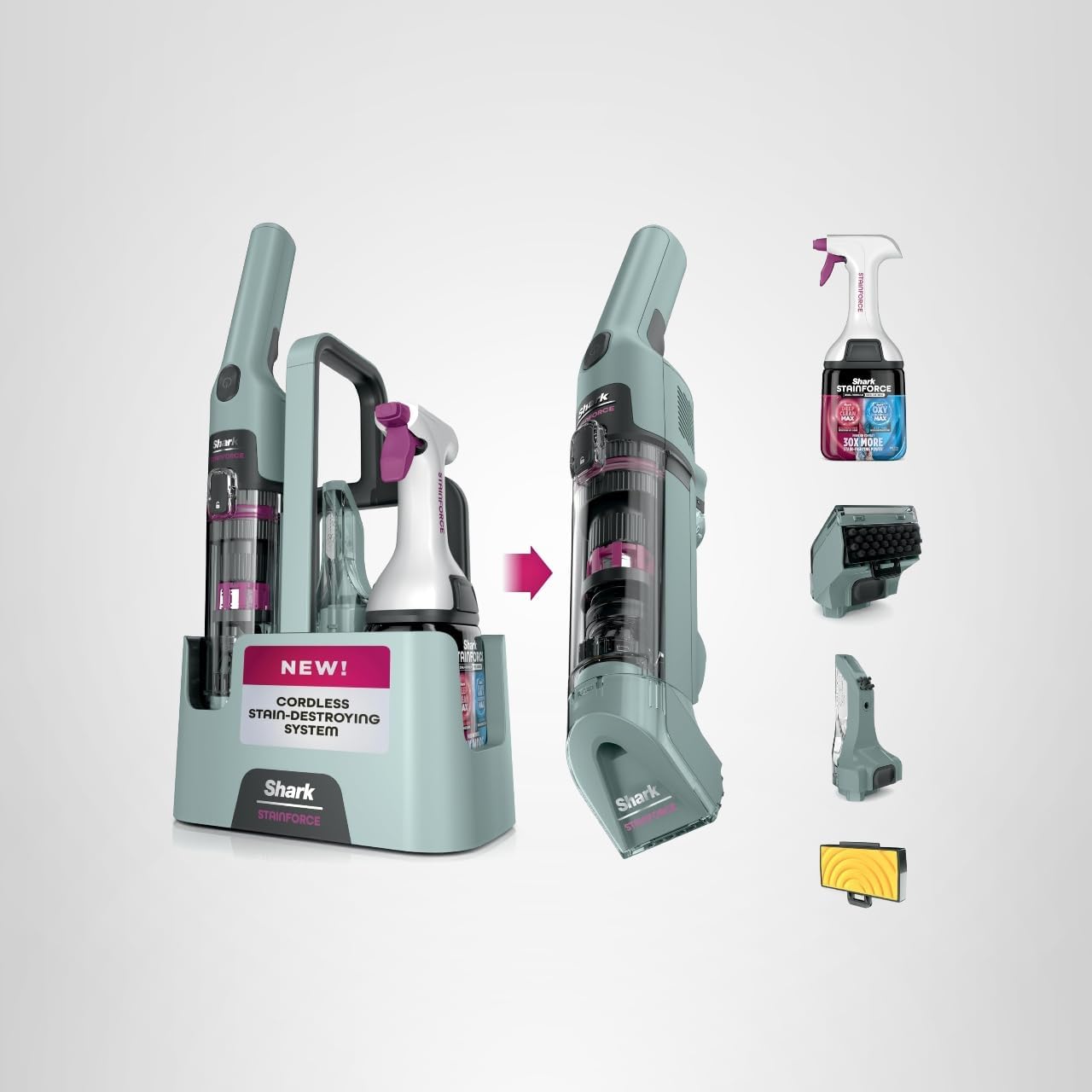 | Good | Excellent | Yes | Quick spills, pets, cars | Small |  | |
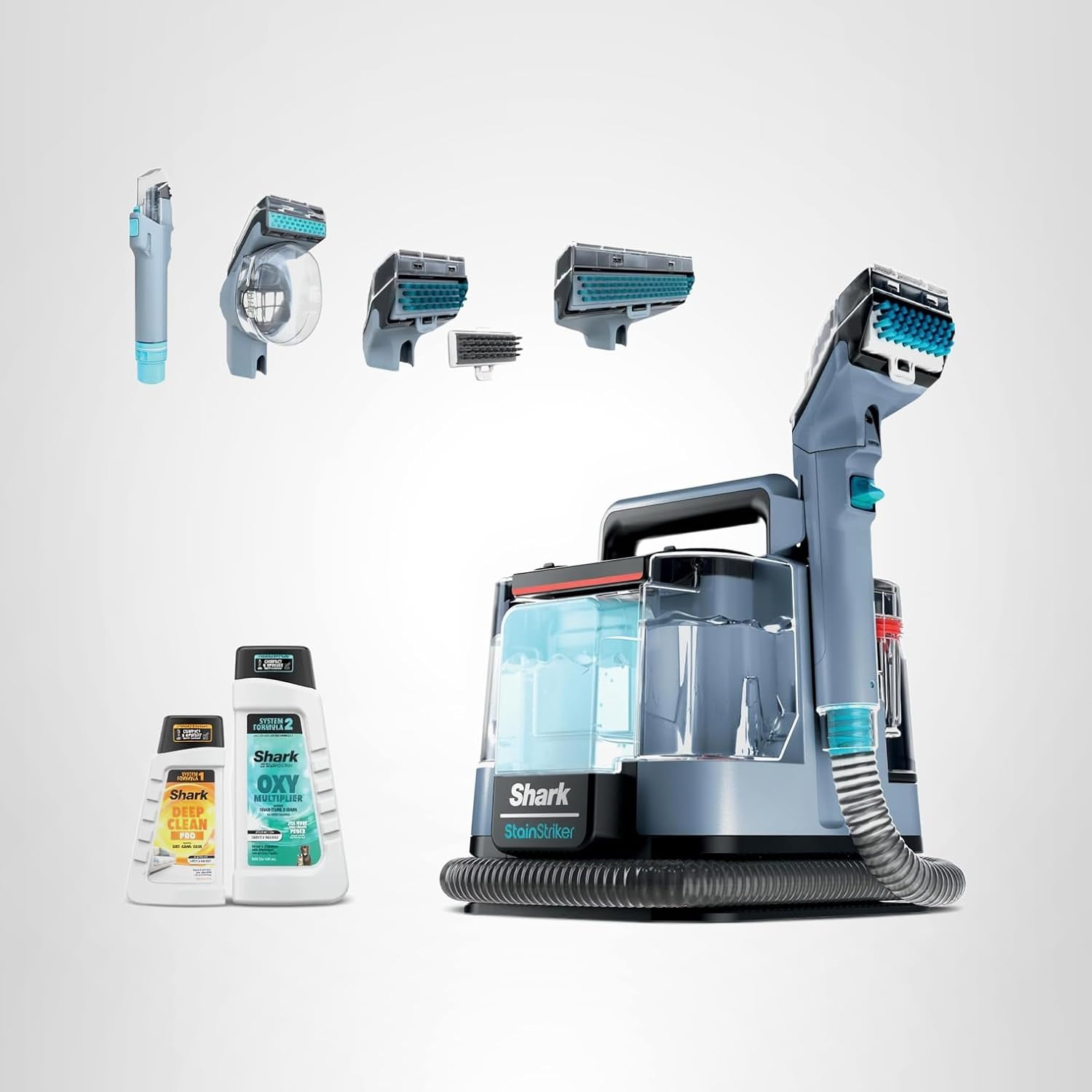 | Excellent | Good | No | Deep stains, carpets | Medium | | |
 | Very Good | Good | No | Everyday stains, upholstery | Medium | | |
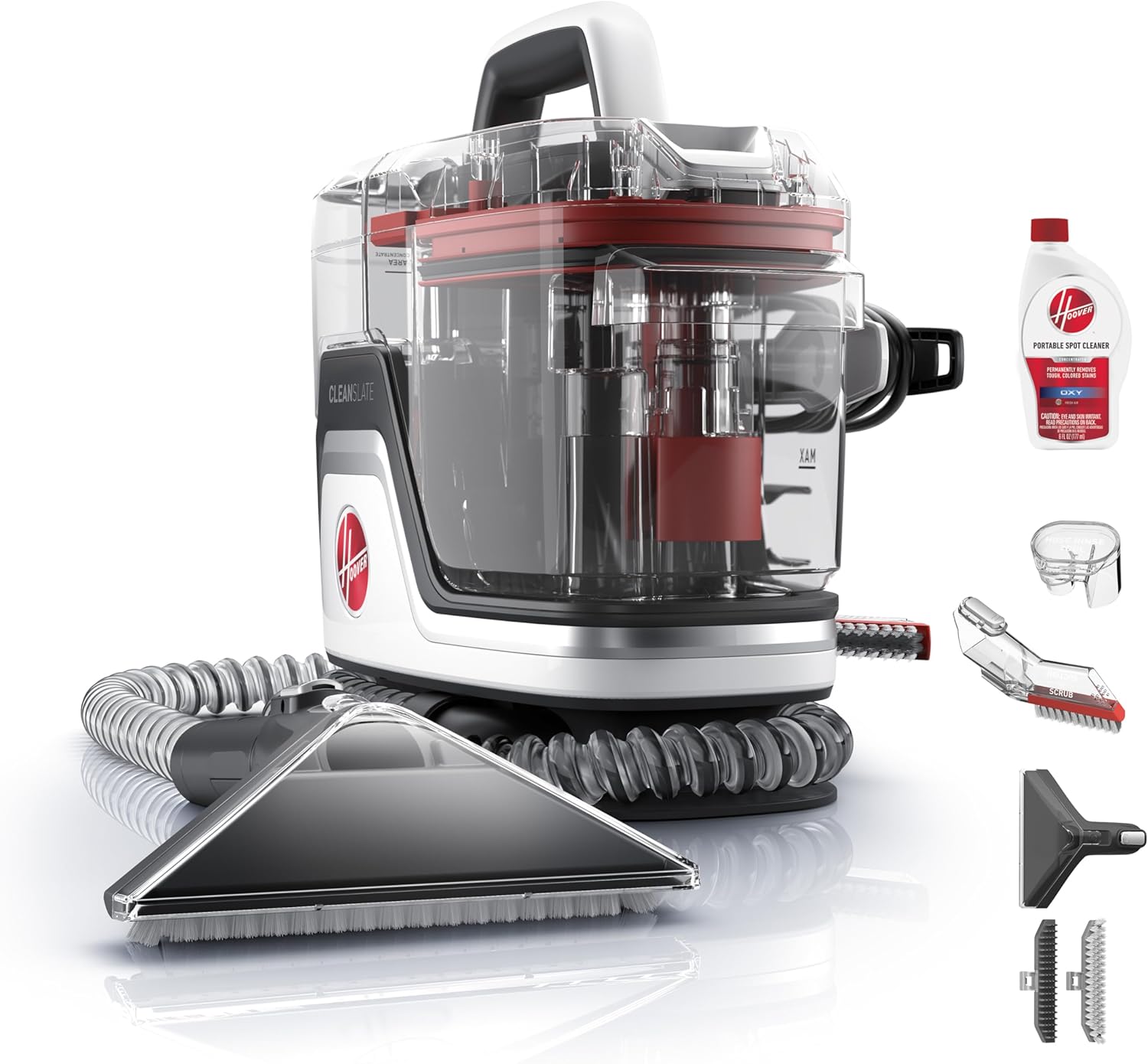 | Excellent | Fair | No | Large stains, carpets | Large | | |
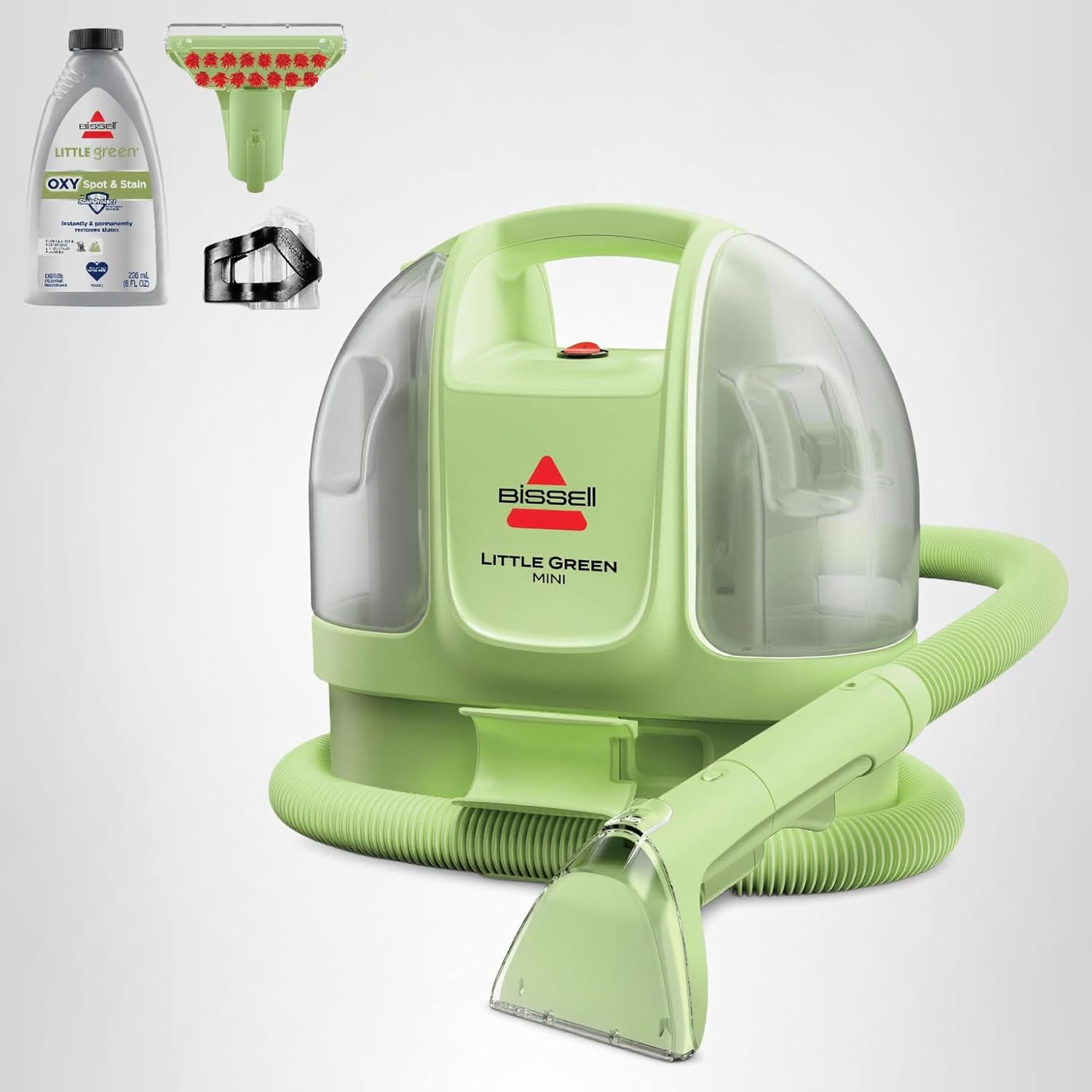 | Good | Excellent | No | Light stains, tiny spaces | Small | |
1. What Causes Carpet Wicking (And Why Beginners Miss It)
Wicking occurs when the lower layers of carpet — the backing or padding — stay saturated after cleaning. As the carpet dries from the top down, the moisture rises, bringing dissolved dirt back to the surface.
The real culprits behind wicking:
- Too much water used during cleaning
- Weak or insufficient extraction (not enough moisture removed)
- Letting the carpet air-dry too slowly
- Skipping post-cleaning blotting or drying steps
- Old stains that have soaked deep into the padding
A simple example:
You spill coffee.
You scrub it (which pushes liquid downward).
You clean the surface.
It looks great…
…but 12 hours later, a brown shadow returns.
That shadow is water traveling upward, carrying stain residue along with it.
2. How to Prevent Carpet Wicking Before It Starts
Stopping wicking is all about controlling water: where it goes, how much you use, and how quickly you remove it.
A. Use Less Water (Don’t Saturate the Carpet)
Most wicking problems start with over-wetting. Beginners think “more water = better cleaning,” but carpets act like sponges.
Use enough solution to loosen the stain — not flood the fibers.
B. Extract More Water Than You Think You Need
Even if you used a moderate amount of water, you must remove as much as possible afterward.
Extraction is more important than scrubbing.
- Do extra suction-only passes with no spray.
- Overlap slowly (it pulls deeper moisture up).
- Work in alternating directions to maximize removal.
This single habit prevents 80% of wicking cases — even for old stains.
C. Blot the Area After Machine Cleaning
Most people skip this step.
Place dry white towels over the cleaned area and press firmly or stand on them.
This pulls up deep moisture that machines often miss.
D. Speed Up the Drying Process
The faster the surface dries, the less time water has to travel upward.
Use:
- Air movers
- Fans
- Ceiling fans
- Open windows (dry climates)
- Dehumidifiers (humid climates)
Aim for full dryness within 4–6 hours, not overnight.
E. Treat Deep Stains Like Deep Stains
If a stain has been there for months (especially pet urine), it’s already in the padding.
You’ll need:
- Light cleaning solution
- Aggressive extraction
- Long drying time + airflow
- Possibly multiple extraction sessions
It’s not about “cleaning harder” — it’s about “extracting deeper.”
Product | Cleaning Power | Portability | Cordless | Best Use Case | Tank Size | Price | |
|---|---|---|---|---|---|---|---|
| Good | Excellent | Yes | Quick spills, pets, cars | Small | | |
| Excellent | Good | No | Deep stains, carpets | Medium | | |
| Very Good | Good | No | Everyday stains, upholstery | Medium | | |
| Excellent | Fair | No | Large stains, carpets | Large | | |
| Good | Excellent | No | Light stains, tiny spaces | Small | |
3. What to Do if a Stain Keeps Coming Back (Fixing Wicking After It Happens)
Even if wicking has already started, you can still fix it without scrubbing or adding more detergent.
Step 1 — Re-wet the area lightly
Use a mist spray, not a soaking spray.
You want moisture on the fibers, not the padding.
Step 2 — Extract thoroughly
Do 10–15 slow suction passes in different directions.
Pretend you’re vacuuming a spill, not cleaning a stain.
Step 3 — Use the “towel compression method”
Place a stack of 3–5 white towels over the area.
Put something heavy on them (books, weights, shoes).
Leave for several hours.
This pulls up moisture from the pad that causes reappearing stains.
Step 4 — Speed dry the surface
Use airflow until the carpets feel crisp, not cold or damp.
If wicking happens again, the stain is deep. You may need a larger extractor or a specialized drying tool. I often link readers to bigger comparison guides — if you’re curious how full-size cleaners differ, see Tineco S9 vs S5 for examples of deep extraction technology.
Causes of Wicking + How to Prevent Each One
Carpet Wicking Prevention Table
Cause of Wicking | Why It Happens | How to Prevent It |
|---|---|---|
Using too much water | Water sinks into padding | Use lighter spray, avoid saturation |
Weak extraction | Moisture stays deep in carpet | Use slow suction-only passes |
Slow drying | Moisture rises to the surface | Use fans, dehumidifiers, airflow |
Old deep stains | Residue in carpet backing | Light re-wet, heavy extraction, towel compression |
Scrubbing too hard | Pushes stain deeper | Blot instead; let machine do the work |
FAQs
What causes carpet wicking after cleaning?
Carpet wicking happens when moisture in the padding rises back through the fibers as the carpet dries, bringing dirt with it.
How do I stop old stains from coming back?
Extract more water, avoid over-wetting, use airflow to dry faster, and use towel compression to pull deep moisture upward.
Should I scrub hard to prevent wicking?
No — scrubbing forces residue deeper. Extraction is what prevents wicking, not friction.
How long should carpet take to dry to avoid wicking?
Ideally 4–6 hours. Longer than that increases the chance of moisture rising to the surface.
Do dehumidifiers help prevent wicking?
Yes — they speed up evaporation and prevent moisture from climbing upward.
Other Interesting Articles
- Best Carpet Spot Cleaner (2026): Top 5 Picks After Testing Real Stains
- Shark StainForce vs Hoover CleanSlate: Best for Carpet Deep Cleaning
- Shark StainForce vs Shark StainStriker: Best Portable Carpet and Upholstery Cleaner
- Shark StainForce vs Bissell Little Green: Which Spot Cleaner Should You REALLY Buy?
About the Author
VacuumsPal helps homeowners cut through confusing cleaning advice by providing practical insights based on real-world testing and expert knowledge. From stain removal to floor care, we simplify the choices so you get results — not headaches.