I'm a participant in the Amazon Services LLC Associates Program, an affiliate advertising program designed to provide a means for me to earn fees by linking to Amazon.com and affiliated sites.
If you’re shopping for a carpet spot cleaner, you don’t just want “some cleaner”—you want one that actually works for your home. In this guide I walk you through the 12 features that truly separate a good spot cleaner from a disappointing one. Think of this as a checklist: match these to your lifestyle, and you’re much more likely to pick a cleaner you’ll be happy with for years.
Quick take: A great carpet spot cleaner isn’t about fancy branding or lowest price — it’s about suction strength, tank size, attachments, maintenance ease, and whether it matches how you clean.
- Shark StainForce is the best cordless option for fast, everyday cleanups.
- Shark StainStriker delivers the deepest cleaning power for tough carpet stains.
- Hoover CleanSlate Pro is the best for large spills and high-traffic homes.
- BISSELL Little Green remains the best all-around value.
- BISSELL Little Green Mini is the best tiny-but-mighty option for small spaces.
Why this matters: Many people grab a spot-cleaner on impulse and regret it later — because the unit was weak, too small, or unwieldy. This guide helps you avoid wasting time or money, and end up with a tool that really solves carpet messes.
Product | Cleaning Power | Portability | Cordless | Best Use Case | Tank Size | Price | |
|---|---|---|---|---|---|---|---|
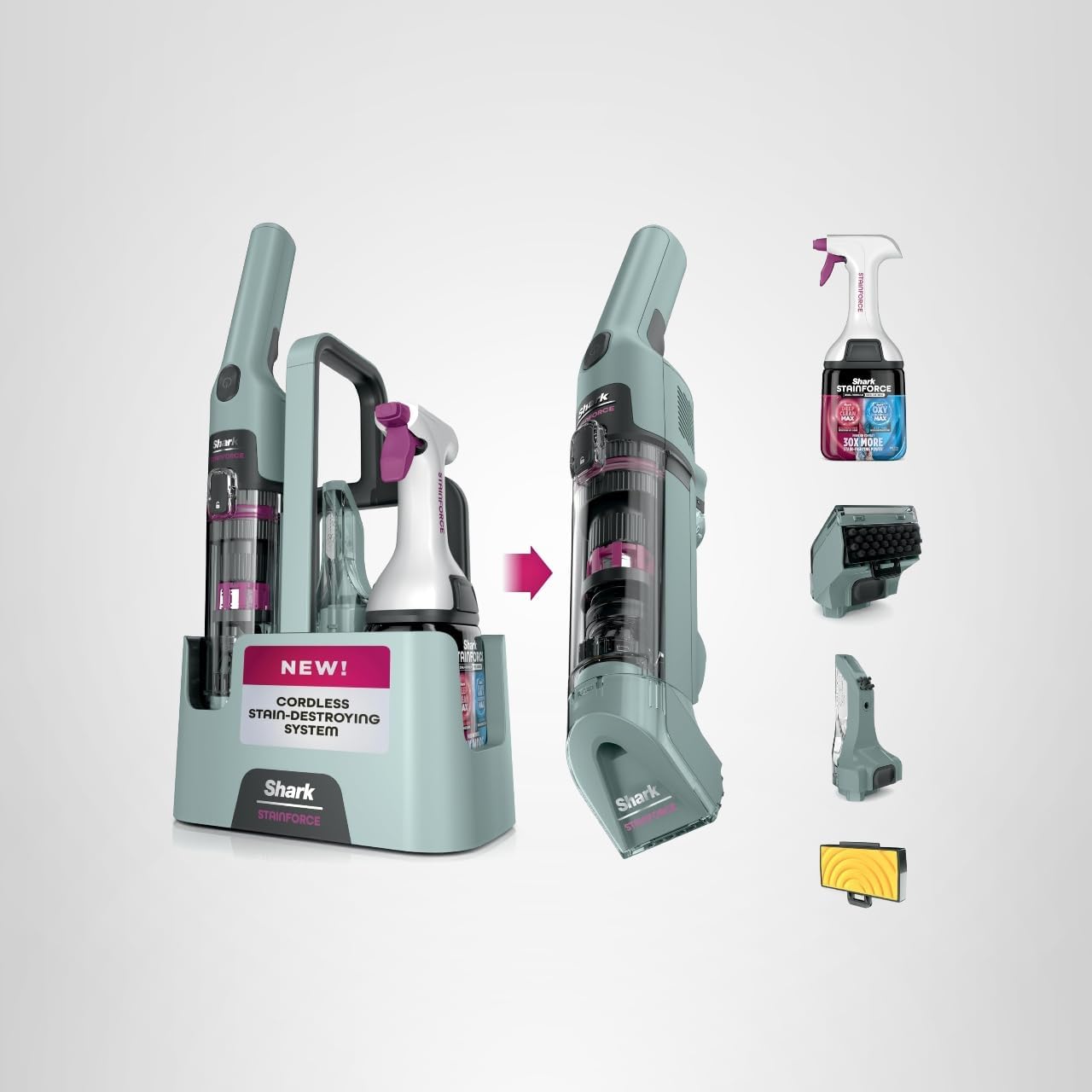 | Good | Excellent | Yes | Quick spills, pets, cars | Small |  | |
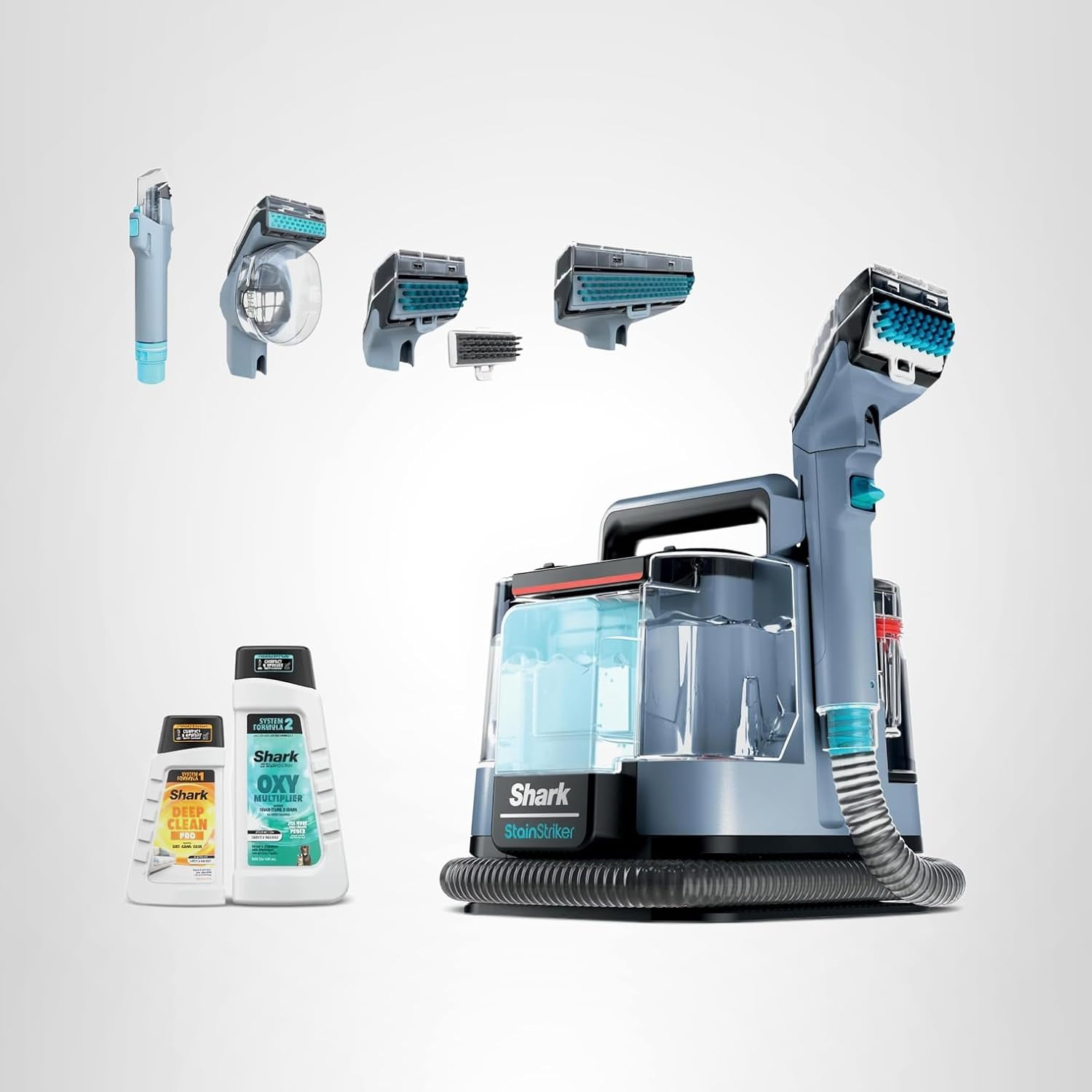 | Excellent | Good | No | Deep stains, carpets | Medium | | |
 | Very Good | Good | No | Everyday stains, upholstery | Medium | | |
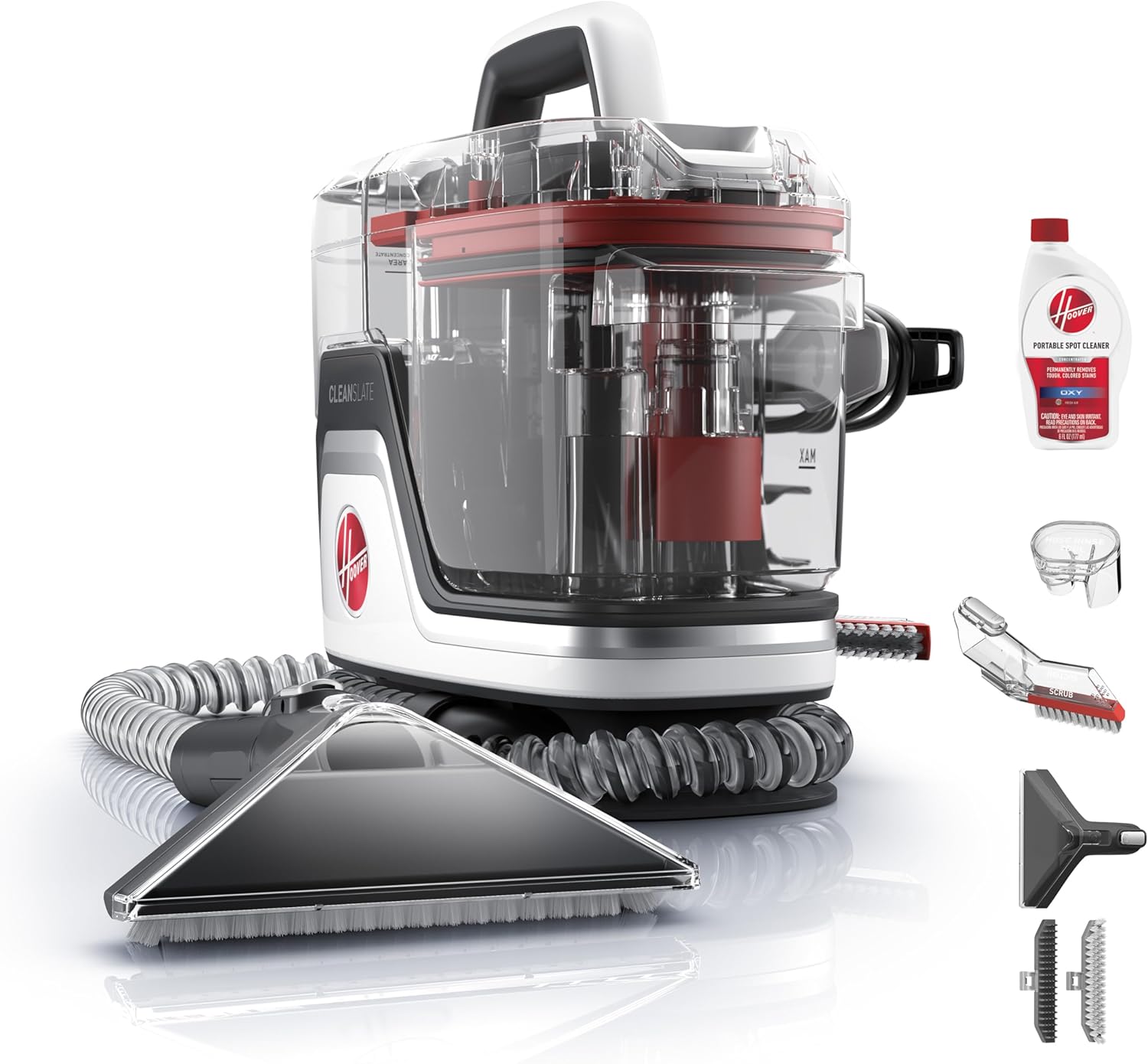 | Excellent | Fair | No | Large stains, carpets | Large | | |
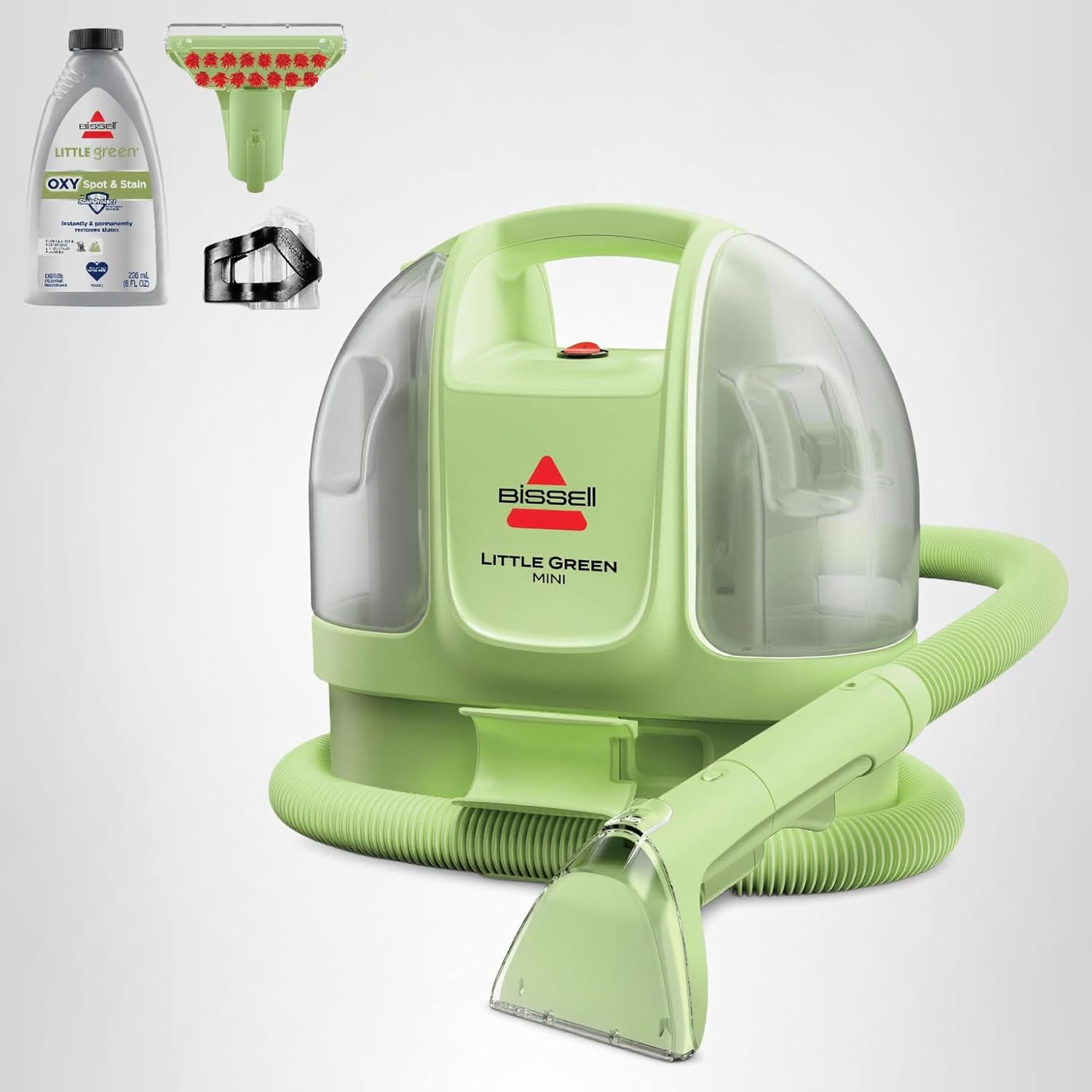 | Good | Excellent | No | Light stains, tiny spaces | Small | |
🧰 The 12 Key Features You Should Always Evaluate
1. Suction & Extraction Power
A spot cleaner’s suction strength is perhaps the most important factor. Without strong suction, urine, spills, or deep-set stains won’t fully come out.
- Look for a model with a powerful motor, ideally tested for “deep extraction.”
- If you have pets, kids, or heavy foot traffic — stronger suction means deeper clean, less residue, less odor chance.
2. Tank Capacity & Dual-Tank Design
Tank size matters. A bigger clean-water and waste-water tank lets you clean more area without stopping mid-job.
- Dual-tank designs (separate clean & dirty water) make refilling/emptying cleaner and easier.
- But larger tanks = heavier machines. If you want portability over “room-scale cleaning,” balance tank size with weight.
3. Brush & Agitation System (Rotating or Scrubbing Brushes)
A good scrubbing or rotating brush loosens dirt embedded deep in carpet fibers — especially important for pet hair, mud, or old stains.
- A machine without a brush may clean surface spills fine, but struggle with deeper grime.
- Bonus: If brush can be turned off or adjusted, you can use the cleaner on more delicate fabrics without damage.
4. Attachments & Versatility (Pet Tools, Upholstery, Stairs, Crevices)
Your carpets, rugs, upholstery, and stairs aren’t all the same — and neither should your toolset. Good cleaners come with multiple attachments (pet-specific, crevice tools, upholstery heads).
- If you have pets or kids: a “pet tool,” or a nozzle for corners and fabric, can make cleanup much easier.
- Versatility matters if you want one machine to handle carpet, stairs, couch, car interior, etc.
5. Portability, Weight & Ease of Handling
A super-powerful cleaner is useless if you dread lugging it around. Consider: how heavy is it empty vs full, does it have wheels or handles, is hose/cable length good.
- Smaller, lighter machines = easier to grab for quick spills or stairs.
- Larger machines = better for deep cleans — but only if you’re ready to lift and maneuver them.
6. Hose & Cord Length (for Reach)
A long hose and generous power cord make a big difference — especially when cleaning stairs, upholstery, or large rooms.
- Check that the hose/reach suits your home layout before you buy (apartment, multi-story, fine detail vs carpet).
- For portable use (cars, stairs, furniture), a hose + cord combo beats a short, rigid setup.
7. Noise & Comfort During Use
Carpet cleaners tend to be louder and heavier than vacuums. Some models are noisier than others. If you clean regularly—or in shared living spaces—noise matters.
Consider models with quieter motors or ways to dampen sound.
8. Ease of Filling, Emptying & Maintenance
If your tank, hoses or filters are hard to empty or rinse — you’ll dread using the cleaner. Frequent water changes, hose rinsing, and maintenance checks matter.
- Look for easy-open lids, removable tanks, washable filters, and user-friendly interior access.
- The easier it is to clean/prep, the more likely you’ll use it when you actually need it.
9. Drying Time & Water Extraction Efficiency
Water cleanup is only part of the job — how well the machine extracts water determines drying time and whether moisture lingers (leading to mildew or odor).
- Strong suction + deep extraction brushes help reduce moisture retention.
- Some models offer a “dry-only” pass or extra suction to pull more water out after cleaning.
10. Compatibility with Cleaning Solutions (Including Pet-Safe or Enzymatic Cleaners)
If you have pets or kids, you’ll likely need more than water — enzymatic or pet-safe cleaning solutions help break down organic messes (urine, vomit, etc.) and neutralize odors.
- Ensure the cleaner supports solution + water mix (check manufacturer recommendations).
- For pet owners: pick models that recommend or include pet-specific cleaning solutions.
11. Storage Footprint & Where You’ll Keep It
Not everyone has a basement or big closet. Think ahead: do you have space to store the machine when not in use? Will it fit under a shelf or in a laundry closet?
- Compact machines are ideal for small homes/apartments.
- Larger machines—though powerful—need storage space and may be inconvenient for frequent quick cleaning jobs.
12. Price vs Long-Term Value & Warranty / Parts Availability
Don’t just chase the cheapest price. Evaluate long-term value: tank durability, replacement part availability, warranty coverage, expected maintenance cost.
- A mid-range cleaner with good suction, solid build, and accessible parts is often better than a dirt-cheap one with flimsy construction.
- Warranty and parts matter especially if you use the cleaner often or have pets/kids.
Product | Cleaning Power | Portability | Cordless | Best Use Case | Tank Size | Price | |
|---|---|---|---|---|---|---|---|
| Good | Excellent | Yes | Quick spills, pets, cars | Small | | |
| Excellent | Good | No | Deep stains, carpets | Medium | | |
| Very Good | Good | No | Everyday stains, upholstery | Medium | | |
| Excellent | Fair | No | Large stains, carpets | Large | | |
| Good | Excellent | No | Light stains, tiny spaces | Small | |
🧭 How to Choose Based on Your Situation (Use-Case Scenarios)
Use this mini decision tree to match your needs with the right features:
- I live in an apartment or small home & need quick spot cleaning (stairs, small rugs, couch, car): Focus on portability, weight, hose length, storage footprint, and ease of use.
- I have pets or kids; expect frequent accidents or spills: Prioritize suction power, extraction efficiency, pet-safe solution compatibility, and maintenance ease.
- I have a larger home with carpets / rugs / multiple rooms: Look for larger tanks, good suction + brush system, hose/cable reach, and storage space.
- I want deep cleaning (old stains, odor, embedded dirt): Go for strong suction, dual-tank design, powerful brush/agitation, good solution support, and high water-extraction capacity.
- I care about budget but still want durability: Find the balance: mid-range price, reliable suction, accessible parts/warranty — avoid ultra-cheap models that skimp on build quality.
🔎 Common Mistakes People Make — What to Avoid
- Choosing cordless or compact models when they actually need powerful suction & large tank capacity (common mistake for carpeted or pet-heavy homes).
- Focusing only on brand or price — ignoring maintenance cost, replacement parts, or tank durability.
- Picking a model based purely on fresh-spill performance, then being disappointed when it fails on old stains.
- Forgetting to check hose length or cord reach — annoying when cleaning stairs or big rooms.
- Not verifying cleaning-solution compatibility — which can lead to odors, ineffective cleaning, or even damage.
📝 My Checklist Before Buying Any Spot Cleaner
Before buying, I always run through this checklist mentally (and encourage you to do the same):
- Does it have strong enough suction for deep cleaning?
- Are the tanks large enough and separated (clean/dirty)?
- Is there a powered brush or effective agitation system?
- Does it include useful attachments (pet, upholstery, stairs, crevice)?
- Is the weight / size manageable for me?
- Is the hose / cord long enough for my spaces (stairs, rooms, car, etc.)?
- Is the water-extraction efficient (less damp left behind)?
- Is it compatible with pet-safe / enzymatic cleaning solutions (if I have pets)?
- Can I store it easily in my home?
- Are maintenance and cleaning simple (easy-open tanks, washable filters/hose)?
- Is the price justified by build quality, reliability, and support for replacement parts?
- Does the brand offer good warranty / part availability?
If a cleaner checks most of these — you’re likely picking a winner, not just another impulse buy.
🚪 Final Thoughts — Choose Smart, Not Just Cheap or Popular
When you choose a carpet spot cleaner with these 12 features in mind, you’re not just buying a tool — you’re picking a long-term solution. A model that’s hard to use, clunky, or weak will sit idle. A right-fit machine becomes part of your regular cleaning routine — and saves time, frustration, and money in the long run.
If you’re ever unsure — think about your home layout, how often you clean, and what kind of messes you face most. Let that guide your decision rather than a flashy ad or low price.
Other Interesting Articles
- Best Carpet Spot Cleaner (2026): Top 5 Picks After Testing Real Stains
- Shark StainForce vs Hoover CleanSlate: Best for Carpet Deep Cleaning
- Shark StainForce vs Shark StainStriker: Best Portable Carpet and Upholstery Cleaner
- Shark StainForce vs Bissell Little Green: Which Spot Cleaner Should You REALLY Buy?
About the Author
VacuumsPal cuts through marketing fluff and tools you with honest, practical advice based on real-world use. We help everyday homeowners — whether renters, pet-owners, or busy families — find cleaning tools that make life easier.